
EXPLORE & UNDERSTAND
What is Holotropic Breathwork®?
What the name means, what makes the practice distinctive, and what to expect at a workshop.
Holotropic Breathwork® is an experiential approach to self-exploration developed by Stanislav and Christina Grof. It brings together deeper, faster breathing, evocative music, a supportive partnership and trained facilitation. The intention is to make room for experiences beyond our usual everyday awareness, and to approach them with curiosity rather than a predetermined outcome.

What does “holotropic” mean?
The name comes from two Greek roots: holos — whole, and trepein — moving towards. Together, they mean moving towards wholeness.
This expresses the practice’s central idea: that understanding can emerge through attending to our own experience, not only through someone else’s explanation of it.
What makes Holotropic Breathwork unique?
Unlike many guided practices, Holotropic Breathwork creates space for your own inner wisdom to guide the journey.
- Your experience leads. After the opening instructions, sessions unfold without ongoing spoken guidance.
- A musical journey. Carefully selected music accompanies and supports your experience.
- Time for the process. Each breathing session is approximately three hours long.
- Breather and sitter pairs. Participants take turns in each role across the workshop.
- A dedicated sitter. Each breather has a dedicated sitter throughout the session, rather than both breathing at the same time.
- Focused support. Facilitators offer bodywork when appropriate, with your explicit consent.
- Room for natural expression. You can follow the body—moving, shaking, dancing, expressing emotions or resting.
Everything is welcome. Nothing is required.
There is no pressure to perform, produce a dramatic experience or express yourself in a particular way. Expression is held within the group’s agreed safety boundaries, with respect for your own and other people’s space.
Facilitators remain available for requests for help or safety needs. Self-direction does not mean being left alone, and physical touch is never assumed.
What to expect at a workshop
Before the session
You receive an introduction to the approach and practical guidance for both roles. There is space to ask questions, discuss boundaries and agree on support with your partner. Participation suitability is considered beforehand through the health questionnaire and conversation with the facilitator.
During the session
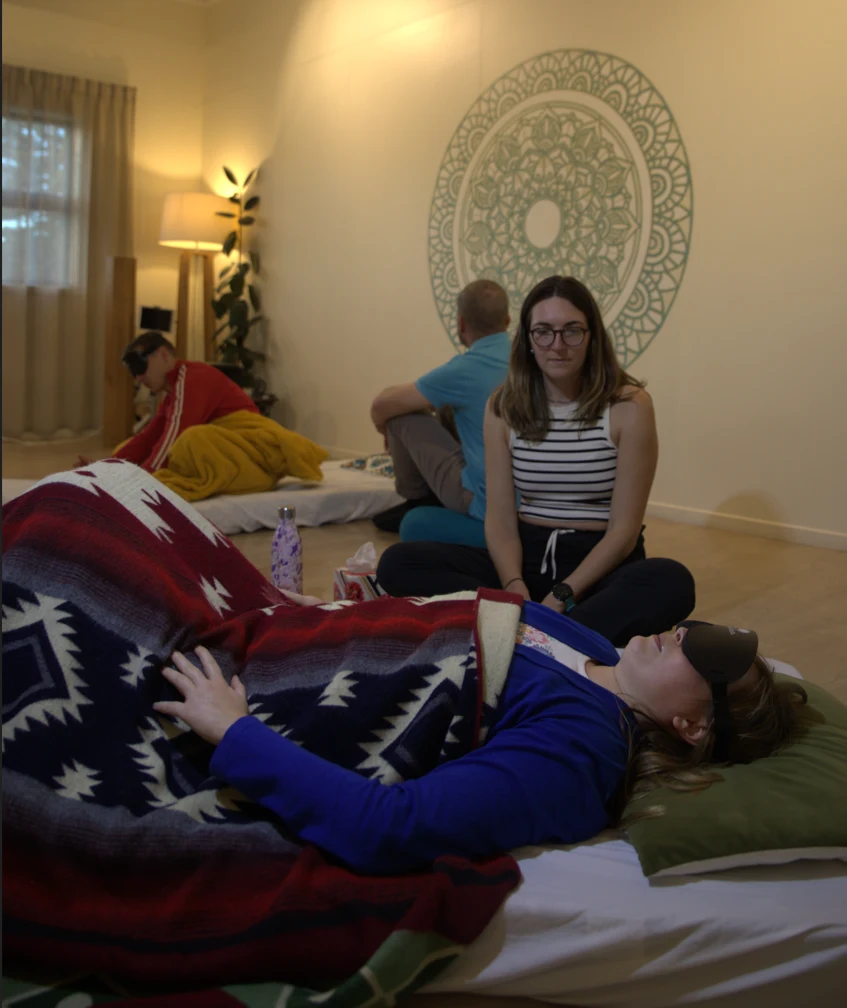
As a breather, you usually begin lying on a mat with your eyes closed or an eye mask, turning attention towards your breath, the music and what you notice inside. This is not a guided visualisation or a task with a correct result.
As a sitter, you offer attentive, practical support: staying nearby, helping with a blanket or water, and calling a facilitator when needed. Your role is not to analyse, direct or interrupt your partner’s process. Facilitators support the group and respond to requests for help.
After the session
The workshop includes time to settle, draw a mandala or otherwise express something of your experience, and join a sharing circle. Artistic skill is not needed. Integration means gradually finding your own relationship to what happened; no one needs to supply an immediate interpretation for you.

The full workshop is longer than the breathing session itself because preparation, sitting for a partner and integration are also part of the experience. Check each event’s programme for its particular format.
What might the experience feel like?
There is no single expected experience. People may notice emotion, memories, imagery, bodily sensations, a sense of connection or periods of stillness. Some experiences are difficult to put into words. Quietness is not a failure, and intensity is not a measure of progress.
You can ask for help and decline physical support. The aim is not to force a breakthrough or promise a particular result.
The people behind the practice
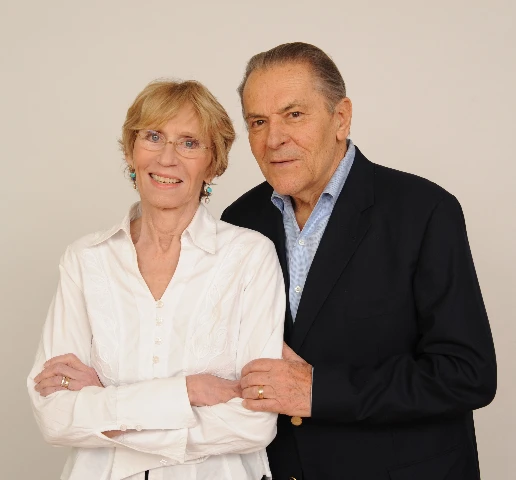
Stanislav Grof, a psychiatrist and researcher, and Christina Grof developed Holotropic Breathwork as a non-substance-based approach to exploring consciousness. It draws on the wider field of transpersonal psychology. Its combination of preparation, an extended session, trained support and integration is what makes it a distinct practice—not simply another name for faster breathing.
Before you book
Holotropic Breathwork can be physically and emotionally demanding and is not appropriate for everyone. Please complete the registration health questions honestly and discuss any concerns with the facilitator before attending; advice from an appropriate health professional may be needed. This workshop is not a substitute for medical or mental-health care.
You are welcome to ask us about suitability or what to expect, meet the people, or explore upcoming workshops. For more depth, visit Theory & practice or our Videos & resources.
Further reading and sources
This introduction is an original overview, informed by the Grofs’ Principles of Holotropic Breathwork, the Institute for Holotropics / GTT’s description of the process and explanation of what defines the method, and this practitioner introduction.
FROM UNDERSTANDING TO EXPERIENCE
Curious about a workshop?
Explore upcoming dates, or talk with us about what to expect.
Explore workshops